
Best Copic Markers for Skin Tones and Hair
Quick answer: For skin tones, a versatile Copic collection includes E000, E00, E11, E13, E21, E23, E25, E27, E29 and E49, with R20 for warmth and BV20 for cool shadows. For hair, useful combinations include Y21,Y23, E35 for blonde, E31, E35, E37 for brown, E44, E47, E49 for dark brown, YR21, YR24, E07 for red, and C5, C7, C9 for black hair.
Choosing Copic markers for skin and hair can feel overwhelming at first. With so many shades available, it can be hard to know which colors work well together, which ones are worth buying, and where to start.
We’ve gathered versatile Copic colors for creating a wide range of skin tones and hair colors, from soft fair complexions to rich deep skin tones, plus blondes, brunettes, redheads, black hair, and more.
Whether you’re coloring stamped images, character illustrations, portraits, or handmade cards, these colors give you a flexible starting point without needing to buy the entire Copic collection.
Copic Markers for Skin Tones
When coloring skin, you usually want more than one marker. Using a light, medium, and darker shade helps create dimension around the face, hairline, neck, arms, and other areas where natural shadows would appear.
The colors below can be mixed and matched to create different undertones and depths.

Best Copic Markers for Light Skin Tones
E000 – Pale Fruit Pink
A very light shade that works beautifully as a soft base color.
E00 – Cotton Pearl
A warm, versatile light skin tone that is especially useful for beginner combinations.
E11 – Barley Beige
Adds warmth and gentle shadow without becoming too dark.
E13 – Light Suntan
A deeper warm shade that can be used sparingly for stronger shadows.
A Simple Light Skin Combination
E000 + E00 + E11
Start with your lightest color, add E00 where you want more warmth, and place E11 in the deepest shadow areas.
For even more depth, add a small amount of E13.
Best Copic Markers for Medium Skin Tones
E21 – Baby Skin Pink
A soft warm base that can work in many medium skin combinations.
E23 – Hazelnut
Adds warmth and definition.
E25 – Caribe Cocoa
A rich midtone that helps deepen shadows.
E27 – Milk Chocolate
Useful for deeper shading and contrast.
A Simple Medium Skin Combination
E21 + E23 + E25
For deeper shadows, bring in E27 around the hairline, under the chin, or in areas that naturally receive less light.
Adding Blush and Warmth
Skin usually looks more natural when it includes subtle changes in color. You can add a small amount of pink, peach, or red to areas such as:
cheeks
lips
nose
elbows
knees
fingertips
The key is using very little color and blending it softly into your existing skin tones. Use R20 for Blush and BV20 for cool shadows.
A little goes a long way.
Best Copic Markers for Deep Skin Tones
E25 – Caribe Cocoa
A warm medium-brown that works beautifully as the lighter foundation or highlight tone in deeper complexion combinations.
E27 – Milk Chocolate
A richer brown that adds depth and warmth, especially around the hairline, cheeks, neck, and other shadow areas.
E29 – Burnt Umber
A deep, warm brown that creates strong shadows and contrast without immediately jumping to the darkest possible shade.
E49 – Dark Bark
A very deep brown that is best used sparingly for the darkest accents and deepest shadow areas.
A Simple Deeper Skin Combination
E25 + E27 + E29
Start with E25 as your lighter foundation, add E27 through the midtones and shadow areas, then use E29 where you need the strongest depth.
The key is to preserve some of the lighter tones so the skin still has highlights and dimension.
Quick Guide: Best Copic Markers for Skin Tones
| Skin Tone | Recommended Copic Colors |
|---|---|
| Fair / Light Skin | E000, E00, E11, E13 |
| Light-Medium / Warm Skin | E21, E23, E25 |
| Deep Skin | E23, E25, E27, E29, E49 |
| Blush / Warmth | R20 |
| Cool Shadows | BV20 |
Skin Tone Copic Markers
Hover over color to add to cart.

Copic Marker E000 Pale Fruit Pink
E000 is a light pinkish tan color that is great for landscapes, backgrounds, and portraits. We rate E000 as an easy blending color and recommend it to use with E00 and E02.
Learn more about E000:
Video Link: How to Clean and Maintain Your Copic Markers
Refill: E000 Refill here. We recommend purchasing a refill with your Sketch Marker. Blending is significantly easier with a full marker.
About Copic Sketch Markers: Sketch are a dual-ended marker with Copic’s exclusive Super Brush Nib on one end for juicy and expressive strokes. The other end is a Medium Broad (chisel style) nib for precise lettering and drawing. Sketch style Copics have an ergonomic oval body and are the most comfortable style of Copic for long coloring sessions and for those with arthritis.
NOTE: Due to manufacturer restrictions, Copic Items can only be shipped to the USA and Canada (excluding the island of Oahu, Hawaii).
Disclaimers:

Copic Marker E00 Cotton Pearl
E00 is a light tan color with a pinkish feel. It’s great for florals, food, and portraits. We rate E00 as an easy blending color and recommend it to use with E0000 and E02.
Learn more about E00:
Video Link: How to Clean and Maintain Your Copic Markers
Refill: E00 Refill here. We recommend purchasing a refill with your Sketch Marker. Blending is significantly easier with a full marker.
About Copic Sketch Markers: Sketch are a dual-ended marker with Copic’s exclusive Super Brush Nib on one end for juicy and expressive strokes. The other end is a Medium Broad (chisel style) nib for precise lettering and drawing. Sketch style Copics have an ergonomic oval body and are the most comfortable style of Copic for long coloring sessions and for those with arthritis.
NOTE: Due to manufacturer restrictions, Copic Items can only be shipped to the USA and Canada (excluding the island of Oahu, Hawaii).
Disclaimers:
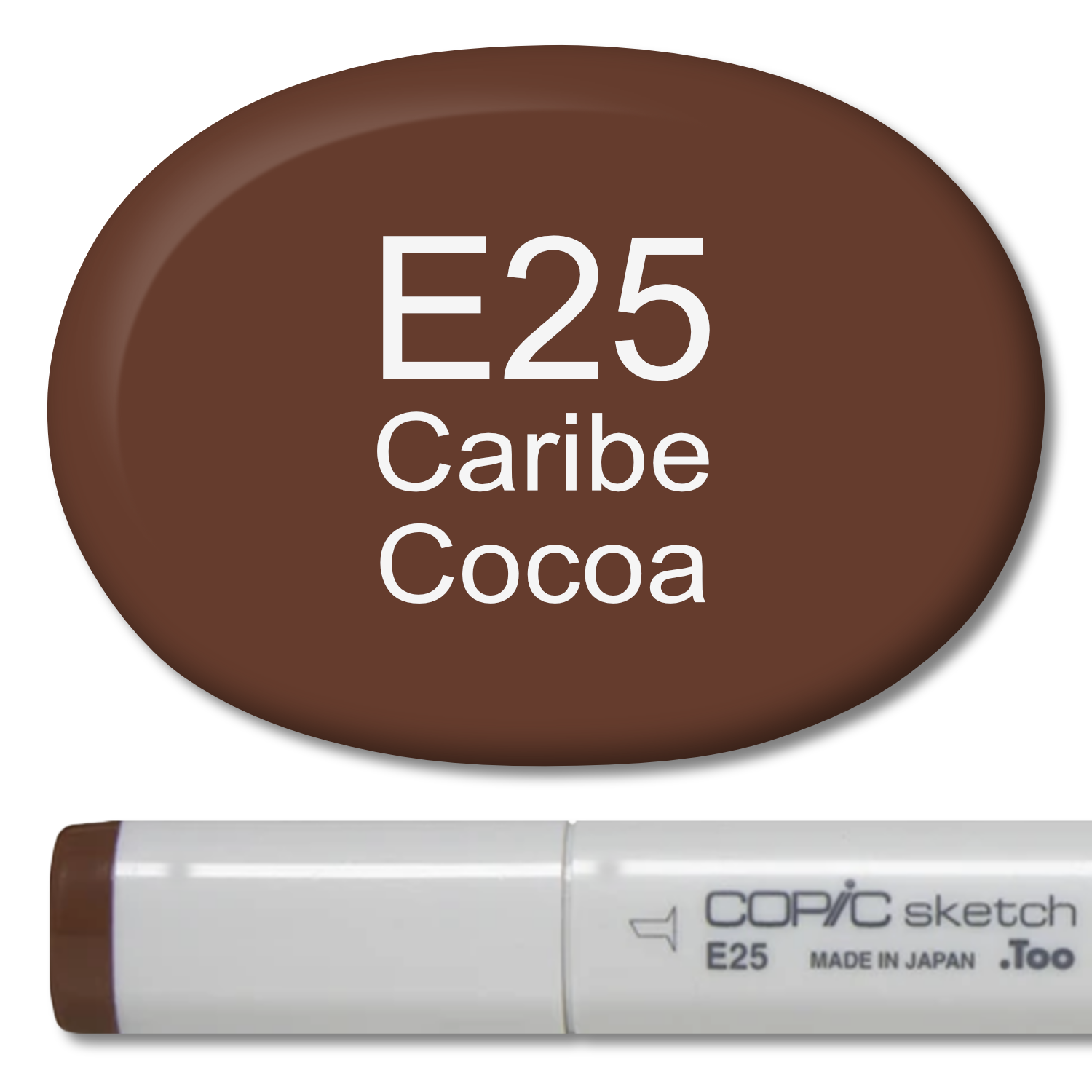
Copic Marker E25 Caribe Cocoa
E25 is commonly used for medium flesh tones by card makers and hobby colorers but it also works for landscapes or anywhere you need a warm medium brown. We rate E25 as an easy blending color and highly recommend it for beginners. It pairs nicely with E21 and E23 for brown objects.
Learn more about E25:
Video Link: How to Clean and Maintain Your Copic Markers
Refill: E25 Refill here. We recommend purchasing a refill with your Sketch Marker. Blending is significantly easier with a full marker.
About Copic Sketch Markers: Sketch are a dual-ended marker with Copic’s exclusive Super Brush Nib on one end for juicy and expressive strokes. The other end is a Medium Broad (chisel style) nib for precise lettering and drawing. Sketch style Copics have an ergonomic oval body and are the most comfortable style of Copic for long coloring sessions and for those with arthritis.
NOTE: Due to manufacturer restrictions, Copic Items can only be shipped to the USA and Canada (excluding the island of Oahu, Hawaii).
Disclaimers:
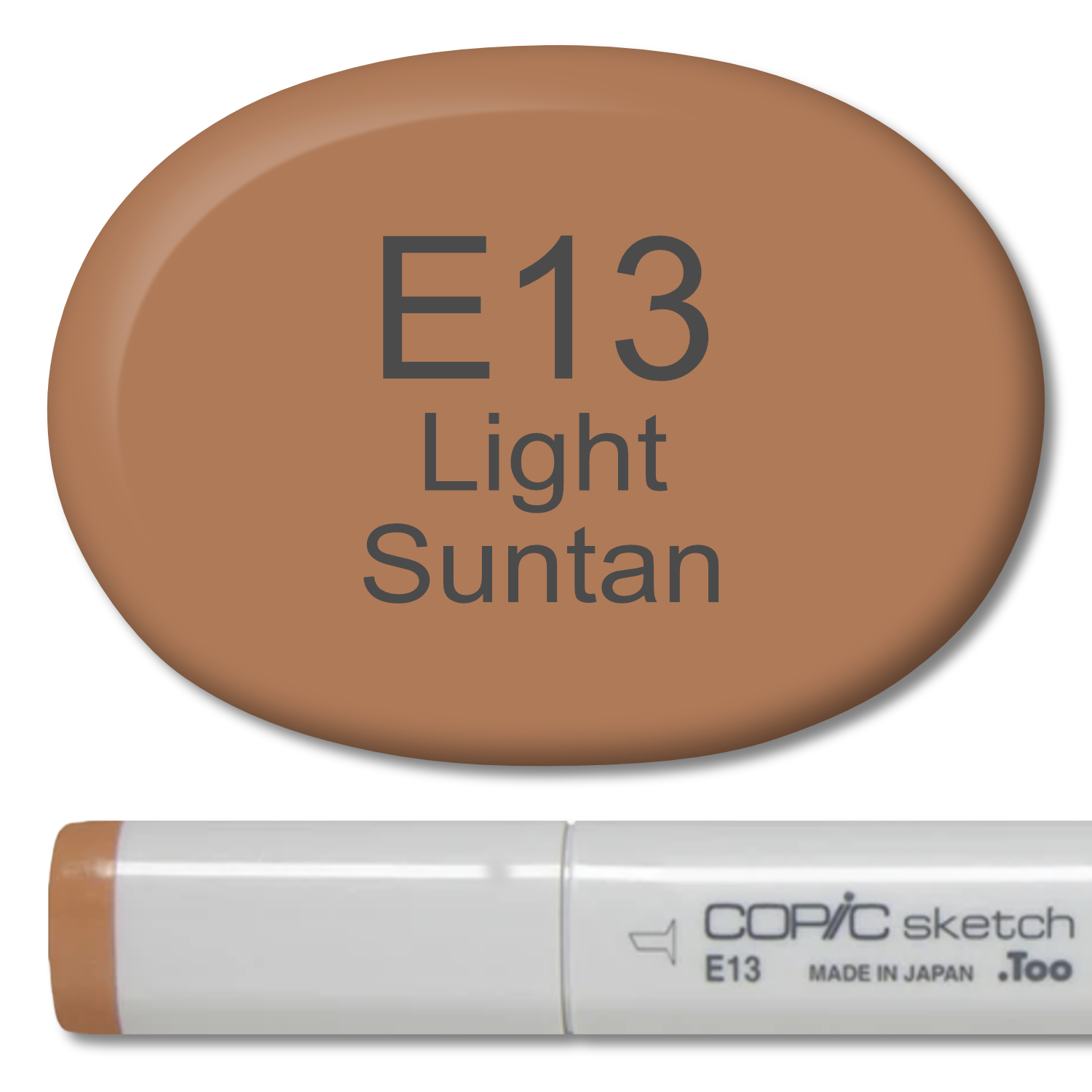
Copic Marker E13 Light Suntan
E13 is a medium beige with an orangish hue. It’s great for landscapes, animals, and portraits. We rate E13 as an easy blending color and recommend it in combination with E11 and E15.
Learn more about E13:
Article Link: Copics Uncapped E13
Video Link: How to Clean and Maintain Your Copic Markers
Refill: E13 Refill here. We recommend purchasing a refill with your Sketch Marker. Blending is significantly easier with a full marker.
About Copic Sketch Markers: Sketch are a dual-ended marker with Copic’s exclusive Super Brush Nib on one end for juicy and expressive strokes. The other end is a Medium Broad (chisel style) nib for precise lettering and drawing. Sketch style Copics have an ergonomic oval body and are the most comfortable style of Copic for long coloring sessions and for those with arthritis.
NOTE: Due to manufacturer restrictions, Copic Items can only be shipped to the USA and Canada (excluding the island of Oahu, Hawaii).
Disclaimers:
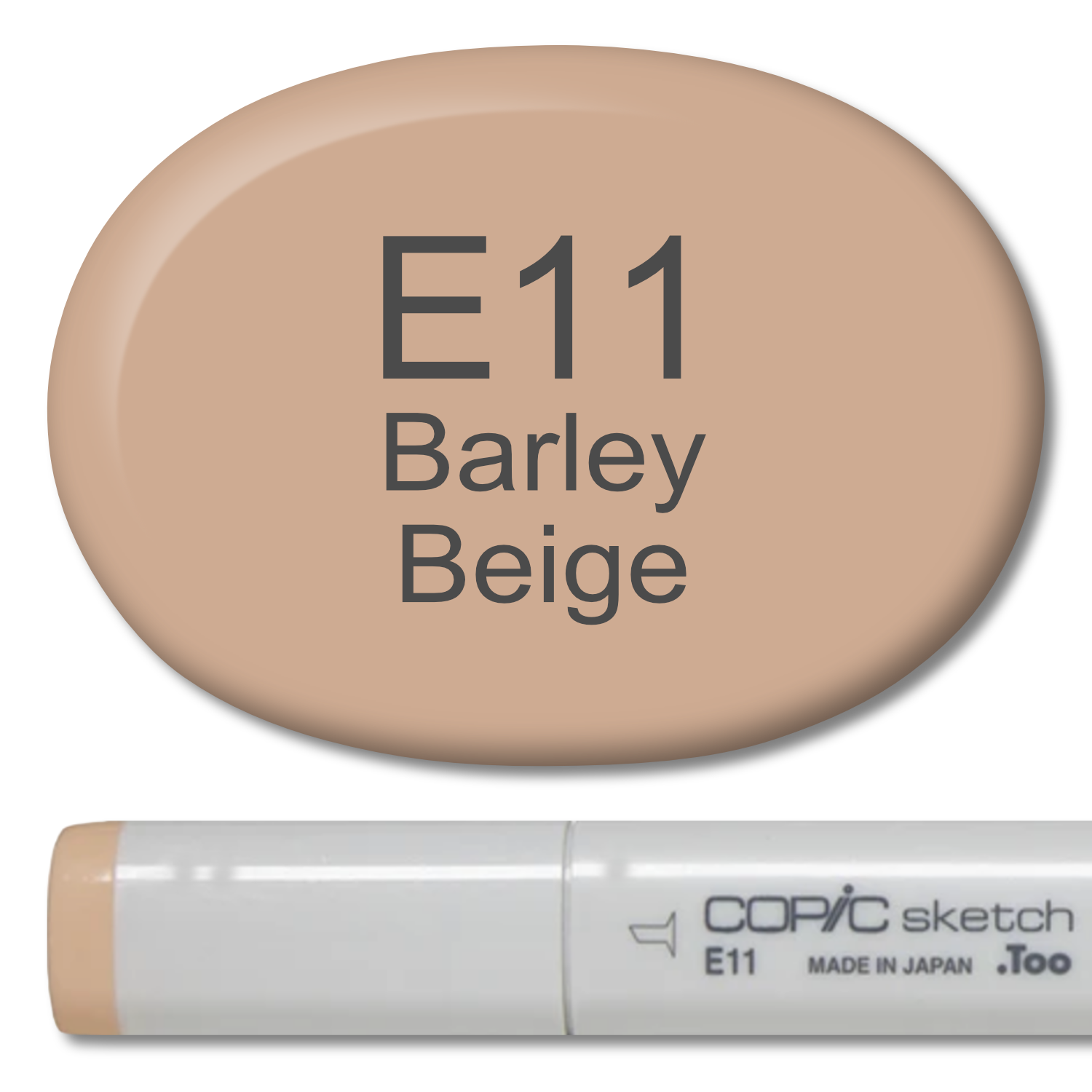
Copic Marker E11 Barley Beige
E11 is a light beige with an orangish hue. It’s great for landscapes, animals, and portraits. We rate E11 as an easy blending color and recommend it to use with E13 and E15.
Learn more about E11:
Article Link: Copics Uncapped E11
Video Link: How to Clean and Maintain Your Copic Markers
Refill: E11 Refill here. We recommend purchasing a refill with your Sketch Marker. Blending is significantly easier with a full marker.
About Copic Sketch Markers: Sketch are a dual-ended marker with Copic’s exclusive Super Brush Nib on one end for juicy and expressive strokes. The other end is a Medium Broad (chisel style) nib for precise lettering and drawing. Sketch style Copics have an ergonomic oval body and are the most comfortable style of Copic for long coloring sessions and for those with arthritis.
NOTE: Due to manufacturer restrictions, Copic Items can only be shipped to the USA and Canada (excluding the island of Oahu, Hawaii).
Disclaimers:
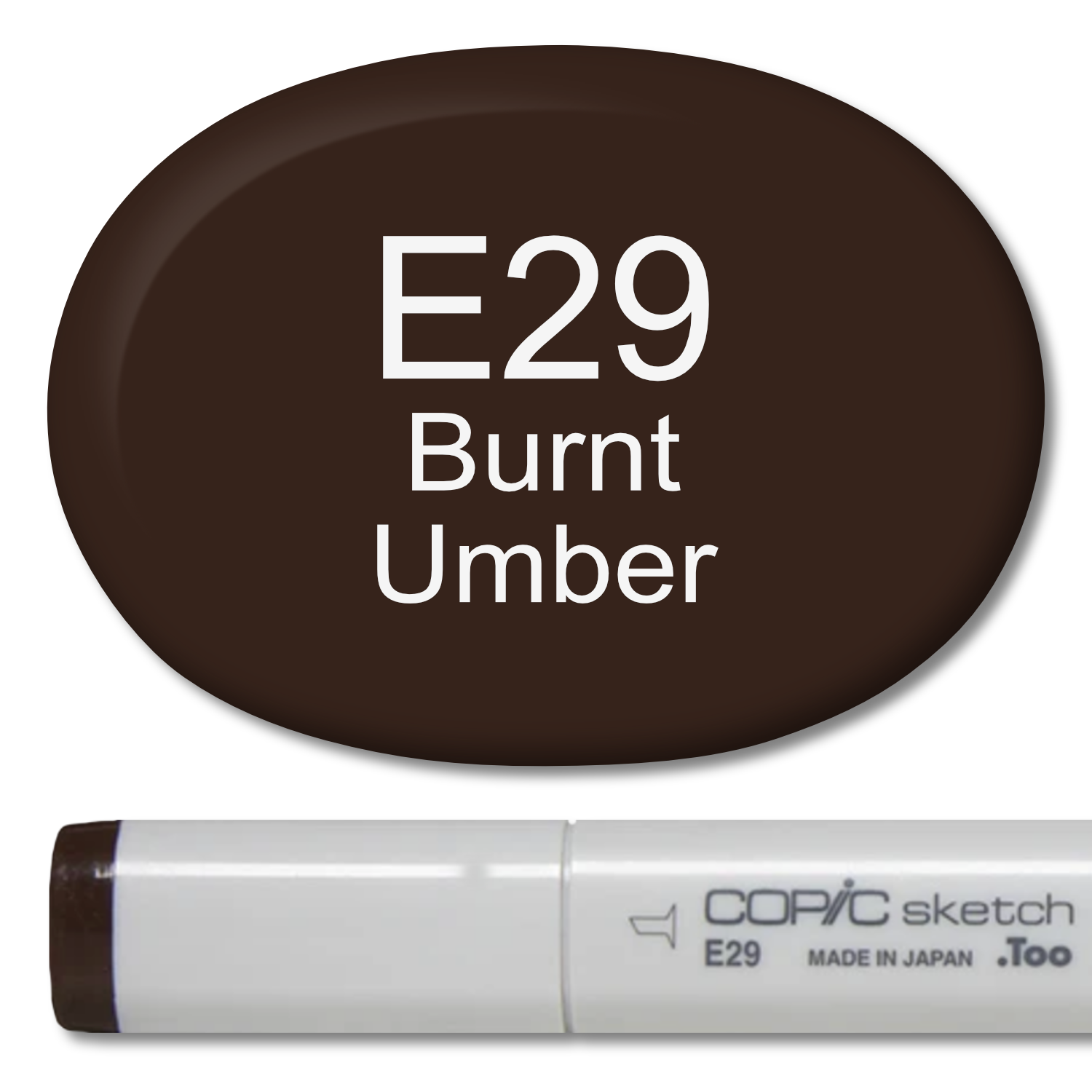
Copic Marker E29 Burnt Umber
E29 is commonly used for dark flesh tones by card makers and hobby colorers but it also works for landscapes or anywhere you need a warm dark brown. We rate E29 as a moderately easy blending color and highly recommend it for beginners. It pairs nicely with E25 and E27 for brown objects.
Learn more about E29:
Article Link: Copics Uncapped E29
Video Link: How to Clean and Maintain Your Copic Markers
Refill: E29 Refill here. We recommend purchasing a refill with your Sketch Marker. Blending is significantly easier with a full marker.
About Copic Sketch Markers: Sketch are a dual-ended marker with Copic’s exclusive Super Brush Nib on one end for juicy and expressive strokes. The other end is a Medium Broad (chisel style) nib for precise lettering and drawing. Sketch style Copics have an ergonomic oval body and are the most comfortable style of Copic for long coloring sessions and for those with arthritis.
NOTE: Due to manufacturer restrictions, Copic Items can only be shipped to the USA and Canada (excluding the island of Oahu, Hawaii).
Disclaimers:
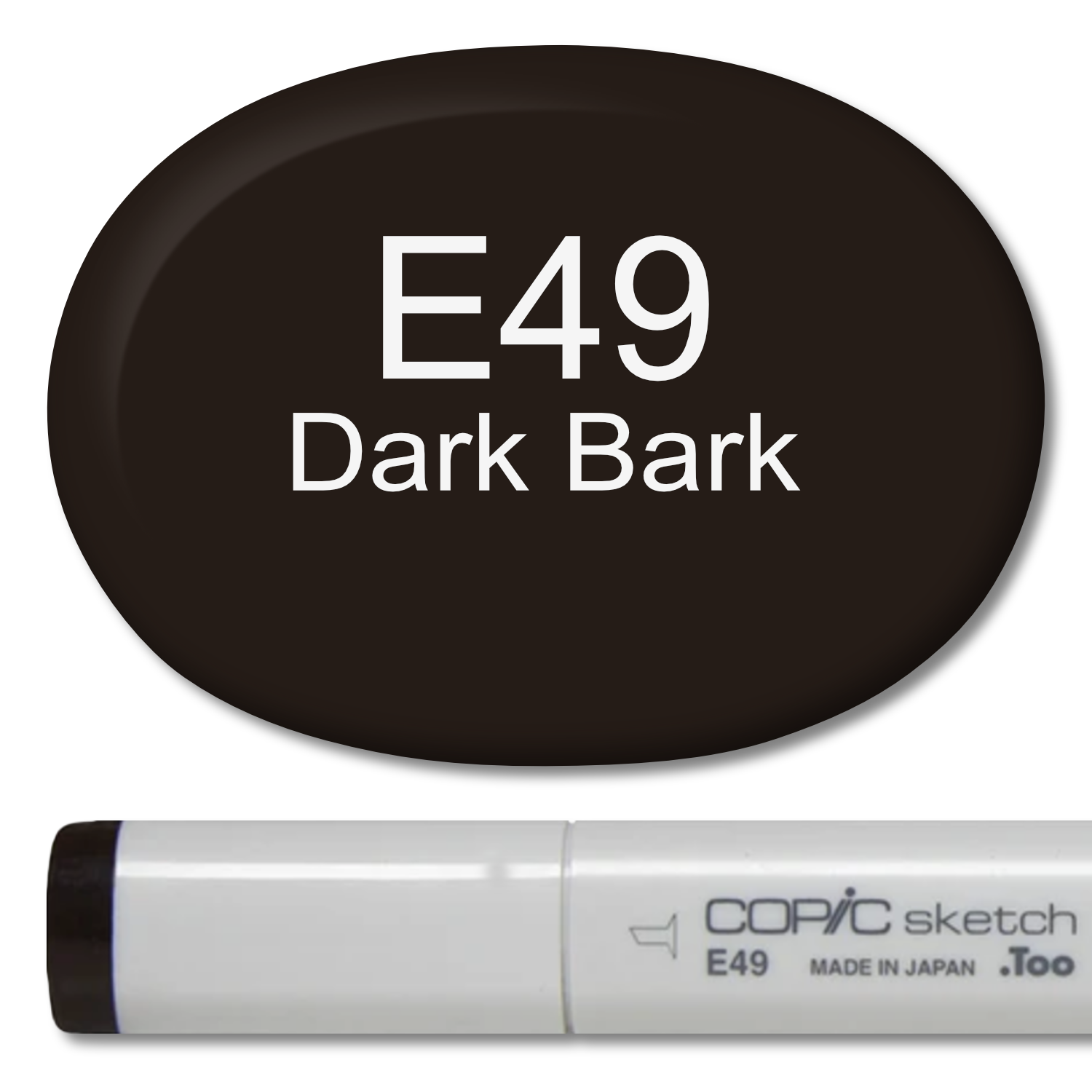
Copic Marker E49 Dark Bark
E49 is a dark brown color, but is lighter than you might expect. It’s great for urban landscapes, foods, and animal fur. We rate E49 as a moderately easy blending color and recommend it in combination with E44 and E47.
Learn more about E49:
Article Link: Copics Uncapped E49
Video Link: How to Clean and Maintain Your Copic Markers
Refill: E49 Refill here. We recommend purchasing a refill with your Sketch Marker. Blending is significantly easier with a full marker.
About Copic Sketch Markers: Sketch are a dual-ended marker with Copic’s exclusive Super Brush Nib on one end for juicy and expressive strokes. The other end is a Medium Broad (chisel style) nib for precise lettering and drawing. Sketch style Copics have an ergonomic oval body and are the most comfortable style of Copic for long coloring sessions and for those with arthritis.
NOTE: Due to manufacturer restrictions, Copic Items can only be shipped to the USA and Canada (excluding the island of Oahu, Hawaii).
Disclaimers:
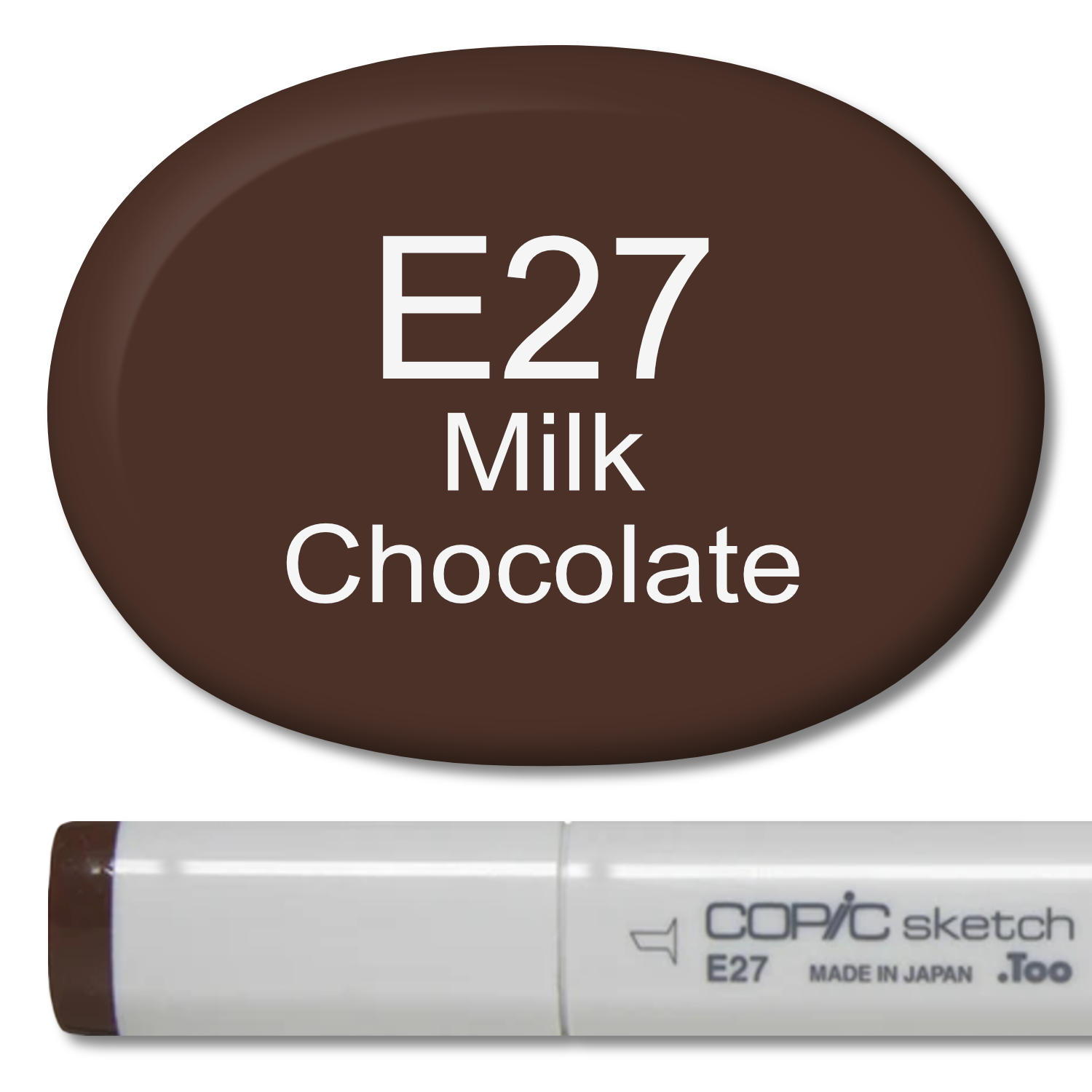
Copic Marker E27 Milk Chocolate
E27 is commonly used for dark flesh tones by card makers and hobby colorers but it also works for landscapes or anywhere you need a warm dark brown. We rate E27 as a moderately easy blending color and highly recommend it for beginners. It pairs nicely with E25 and E29 for brown objects.
Learn more about E27:
Video Link: How to Clean and Maintain Your Copic Markers
Refill: E27 Refill here. We recommend purchasing a refill with your Sketch Marker. Blending is significantly easier with a full marker.
About Copic Sketch Markers: Sketch are a dual-ended marker with Copic’s exclusive Super Brush Nib on one end for juicy and expressive strokes. The other end is a Medium Broad (chisel style) nib for precise lettering and drawing. Sketch style Copics have an ergonomic oval body and are the most comfortable style of Copic for long coloring sessions and for those with arthritis.
NOTE: Due to manufacturer restrictions, Copic Items can only be shipped to the USA and Canada (excluding the island of Oahu, Hawaii).
Disclaimers:
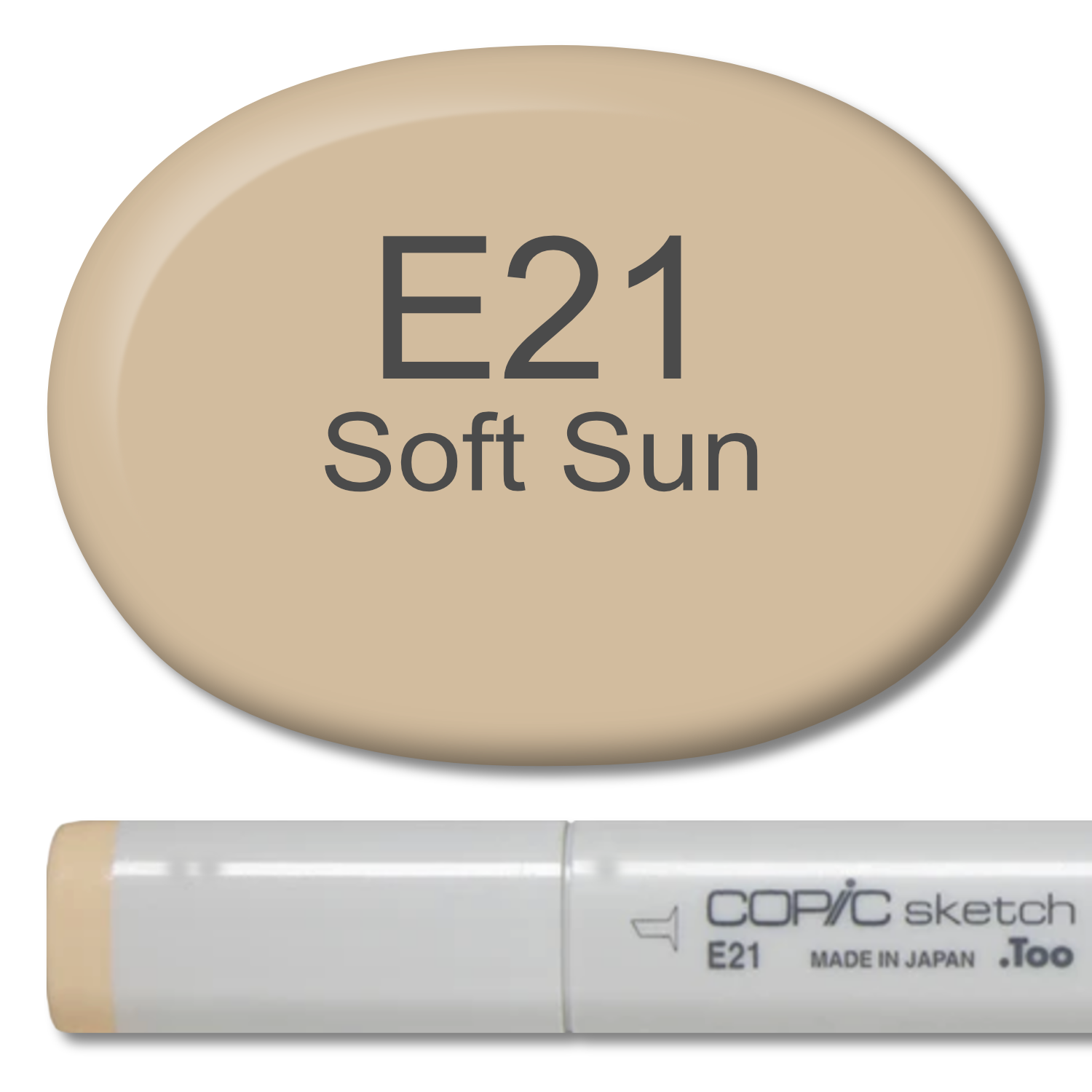
Copic Marker E21 Soft Sun
E21 is one of Copic’s most popular colors and a best seller here at Violeta Ink. E21 is commonly used for Caucasian flesh tones by card makers and hobby colorers but it also works for landscapes or anywhere you need a warm light brown. We rate E21 as an easy blending color and highly recommend it for beginners. It pairs nicely with E23 and E25 for brown objects.
E21 is highly recommended by Amy at VanillaArts.com as part of her Copic Starter List for beginners. Her recommended E markers include E21, E31, E33, E35, E37, E50, and E59. Subscribe here for the full downloadable list.
Learn more about E21:
Article Link: Copics Uncapped E21
Video Link: How to Clean and Maintain Your Copic Markers
Refill: E21 Refill here. We recommend purchasing a refill with your Sketch Marker. Blending is significantly easier with a full marker.
About Copic Sketch Markers: Sketch are a dual-ended marker with Copic’s exclusive Super Brush Nib on one end for juicy and expressive strokes. The other end is a Medium Broad (chisel style) nib for precise lettering and drawing. Sketch style Copics have an ergonomic oval body and are the most comfortable style of Copic for long coloring sessions and for those with arthritis.
NOTE: Due to manufacturer restrictions, Copic Items can only be shipped to the USA and Canada (excluding the island of Oahu, Hawaii).
Disclaimers:
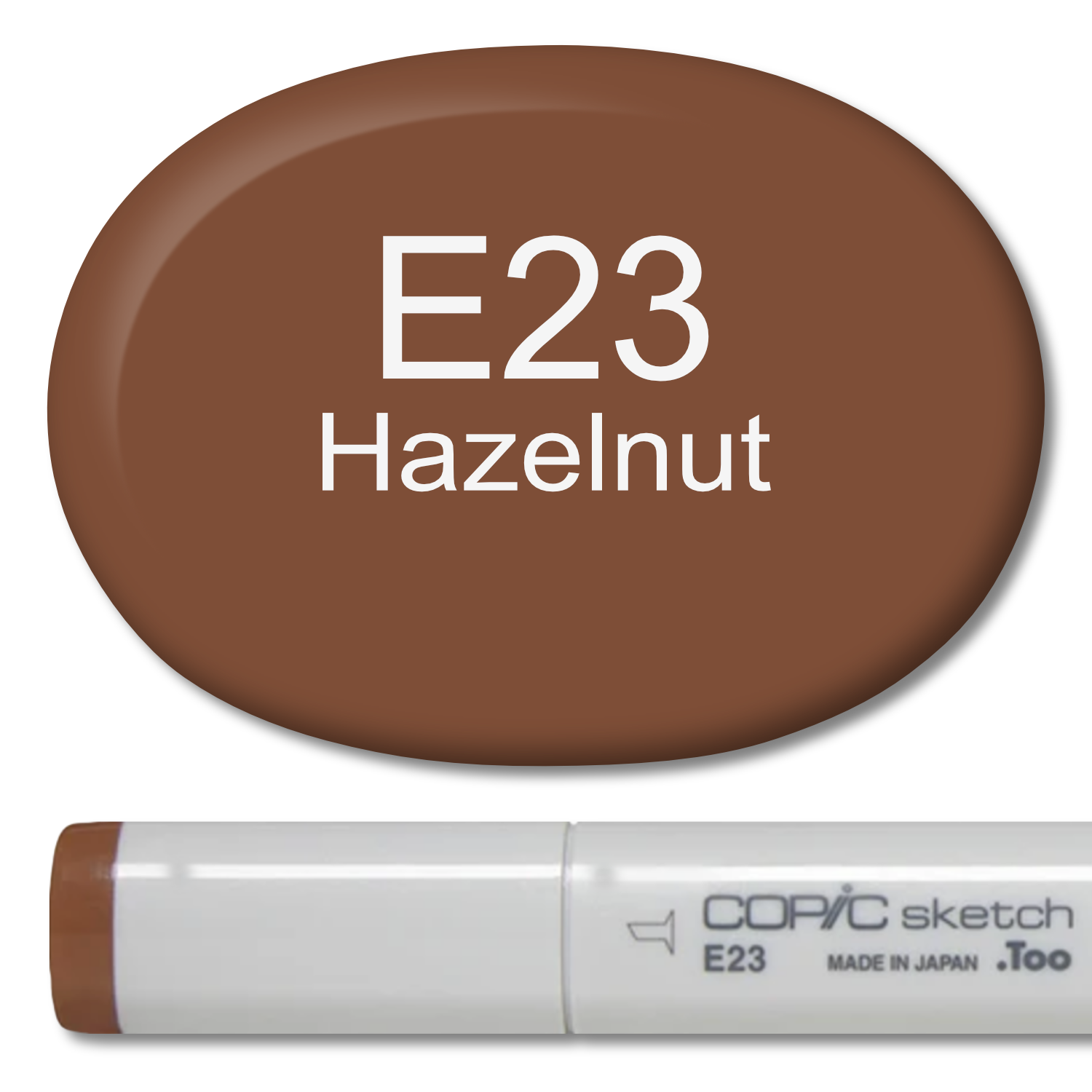
Copic Marker E23 Hazelnut
E23 is commonly used for medium flesh tones by card makers and hobby colorers but it also works for landscapes or anywhere you need a warm medium brown. We rate E23 as an easy blending color and highly recommend it for beginners. It pairs nicely with E21 and E25 for brown objects.
Learn more about E23:
Video Link: How to Clean and Maintain Your Copic Markers
Refill: E23 Refill here. We recommend purchasing a refill with your Sketch Marker. Blending is significantly easier with a full marker.
About Copic Sketch Markers: Sketch are a dual-ended marker with Copic’s exclusive Super Brush Nib on one end for juicy and expressive strokes. The other end is a Medium Broad (chisel style) nib for precise lettering and drawing. Sketch style Copics have an ergonomic oval body and are the most comfortable style of Copic for long coloring sessions and for those with arthritis.
NOTE: Due to manufacturer restrictions, Copic Items can only be shipped to the USA and Canada (excluding the island of Oahu, Hawaii).
Disclaimers:
Favorites From Our Copic for Beginners Community
We asked the artists in our Copic for Beginners Facebook community to share some of their go-to colors for skin tones. Here are a few of their favorites:
“For skin tones, I suggest E50 and E00.”
“I suggest E00 paired with E11 or E21..”
“I use E21 or E11, with E00 and E000”
These community favorites are a great reminder that there isn't just one "perfect" skin-tone recipe. Different artists, papers, lighting, and coloring styles can all change which combinations work best. Use these suggestions as a starting point, swatch them on your favorite paper, and see which blends you love most.
Copic Markers for Hair
Hair is one of the best places to practice creating contrast with Copic markers. Instead of coloring every strand individually, look at the hair as larger sections of light and shadow. Leave some areas lighter where the light would hit and gradually deepen the color toward the roots, underneath sections of hair, and around the face.
Y21 – Buttercup Yellow
Y23 – Yellowish Beige
E35 – Chamois
E37 – Sepia
Y21 + Y23 + E35
Add a small amount of E37 for deeper shadows and extra dimension.
For very light blonde hair, leave more white space or use your lightest shade sparingly so the hair keeps its brightness.
Blonde Hair Combination
E31 – Brick Beige
E33 – Sand
E35 – Chamois
E37 – Sepia
E49 – Dark Bark
E31 + E35 + E37
Brown hair can range from soft golden brunette to almost black, making the earth family especially useful.For darker brunette hair, add E49 in your deepest shadow areas.
Medium Brown Hair Combination

YR21 – Cream
YR24 – Pale Sepia
E07 – Light Mahogany
E09 – Burnt Sienna
Red Hair Combination
YR21 + YR24 + E07
Start with YR21 in the lightest areas, add YR24 through the mid tones, and use E07 for deeper sections and shadows. For a darker auburn look, add a small amount of E09 in the deepest shadow areas.
Red Hair Combinations
E44 – Clay
E47 – Dark Brown
E49 – Dark Bark
Using a slightly lighter brown before your darkest shade helps prevent dark hair from looking flat.
Leave narrow areas of the lighter color visible to create shine.
E44 + E47 + E49
Start with E44 in the lighter areas and highlights, add E47 through the midtones, then use E49 in the deepest shadows, especially near the roots and underneath sections of hair.
Leaving some E44 visible helps keep dark brown hair from looking flat.
Dark Brown Hair Combination
One of the biggest mistakes beginners make when coloring black hair is using only black.
Using several dark grays allows you to create highlights, shadows, and texture while still making the finished hair read as black.
C5 – Cool Gray No. 5
C7 – Cool Gray No. 7
C9 – Cool Gray No. 9
100 – Black
C5 + C7 + C9
Use 100 Black only in the very darkest areas if you want additional contrast.
Leaving portions of C5 or even untouched paper visible can help create realistic shine.
Black Hair Combination
Quick Guide: Best Copic Markers for Hair
| Hair Color | Recommended Copic Colors |
|---|---|
| Blonde Hair | Y21, Y23, E35, E37 |
| Brown Hair | E31, E35, E37 |
| Dark Brown Hair | E44, E47, E49 |
| Black Hair | C5, C7, C9, 100 |
| Red / Auburn Hair | YR21, YR24, E07, E09 |
Copics for Hair
Hover over color to add to cart.

Copic Marker Y21 Buttercup Yellow
Y21 is a muted buttery yellow. This color is great for animals, foods, and autumn themed images. We rate Y21 as an easy blending color and recommend it in combination with Y23 and Y26.
Y21 is highly recommended by Amy at VanillaArts.com as part of her Copic Starter List for beginners. Her recommended Y to YR markers include Y21, Y35, Y38, and YR07 — Yes! YR07 looks great combined with the more orangish Y markers. Subscribe here for the full downloadable list.
Learn more about Y21:
Video Link: All About Y21
Article Link: Copics Uncapped Y21
Video Link: How to Clean and Maintain Your Copic Markers
Refill: Y21 Refill here. We recommend purchasing a refill with your Sketch Marker. Blending is significantly easier with a full marker.
About Copic Sketch Markers: Sketch are a dual-ended marker with Copic’s exclusive Super Brush Nib on one end for juicy and expressive strokes. The other end is a Medium Broad (chisel style) nib for precise lettering and drawing. Sketch style Copics have an ergonomic oval body and are the most comfortable style of Copic for long coloring sessions and for those with arthritis.
NOTE: Due to manufacturer restrictions, Copic Items can only be shipped to the USA and Canada (excluding the island of Oahu, Hawaii).
Disclaimers:

Copic Marker Y23 Yellowish Beige
Y23 is a muted yellow that is great for landscapes and florals. We rate Y23 as an easy blending color and recommend it in combination with Y21 and Y26.
Learn more about Y23:
Article Link: Copics Uncapped Y23
Video Link: How to Clean and Maintain Your Copic Markers
Refill: Y23 Refill here. We recommend purchasing a refill with your Sketch Marker. Blending is significantly easier with a full marker.
About Copic Sketch Markers: Sketch are a dual-ended marker with Copic’s exclusive Super Brush Nib on one end for juicy and expressive strokes. The other end is a Medium Broad (chisel style) nib for precise lettering and drawing. Sketch style Copics have an ergonomic oval body and are the most comfortable style of Copic for long coloring sessions and for those with arthritis.
NOTE: Due to manufacturer restrictions, Copic Items can only be shipped to the USA and Canada (excluding the island of Oahu, Hawaii).
Disclaimers:
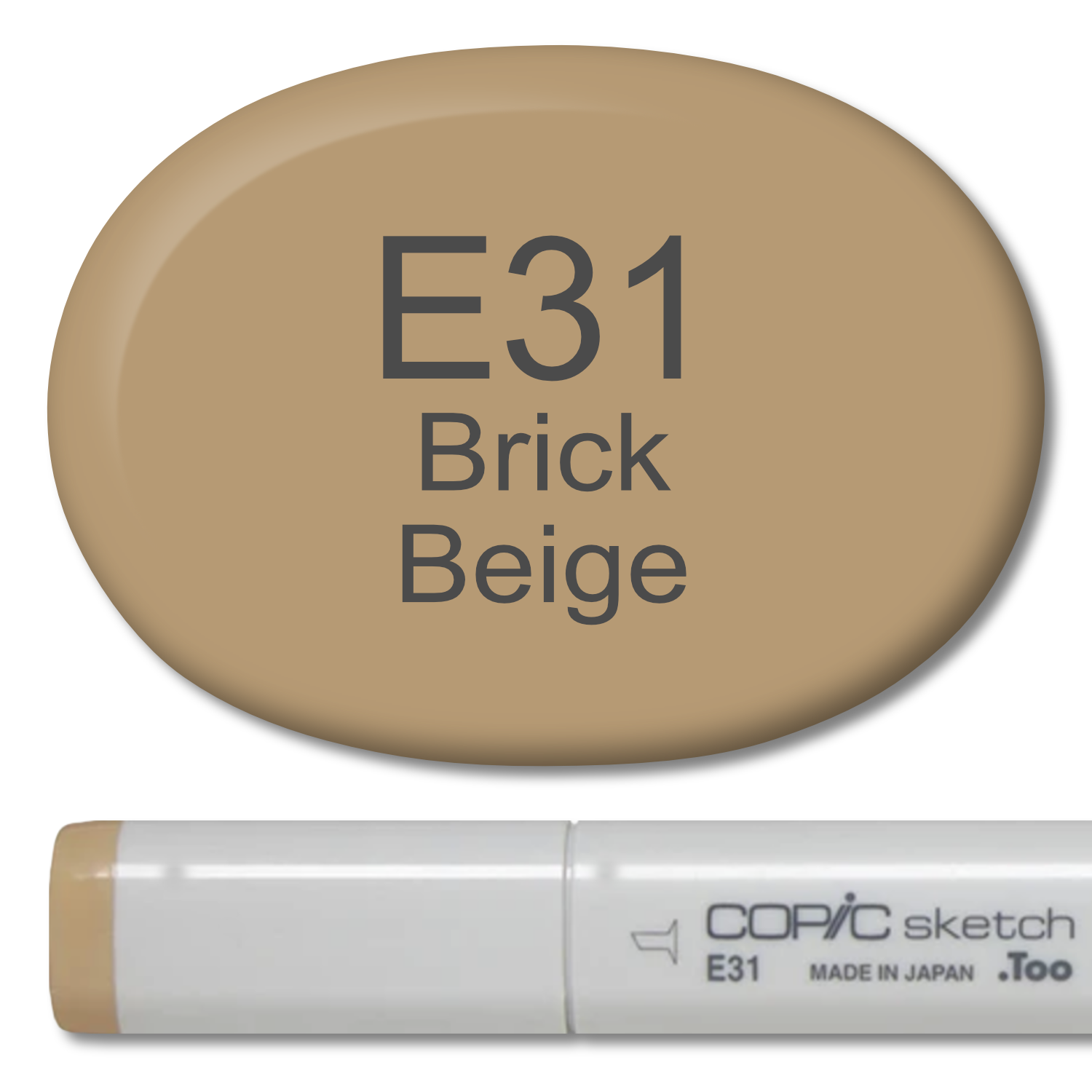
Copic Marker E31 Brick Beige
E31 is a versatile warm beige that can be used for flesh tones, landscapes, foods, and animal fur. We rate E31 as an easy blending color and pairs best with E33 and E35. We recommend the entire E-Thirty group for beginners.
E31 is highly recommended by Amy at VanillaArts.com as part of her Copic Starter List for beginners. Her recommended E markers include E21, E31, E33, E35, E37, E50, and E59. Subscribe here for the full downloadable list.
Learn more about E31:
Article Link: Copics Uncapped E31
Video Link: How to Clean and Maintain Your Copic Markers
Refill: E31 Refill here. We recommend purchasing a refill with your Sketch Marker. Blending is significantly easier with a full marker.
About Copic Sketch Markers: Sketch are a dual-ended marker with Copic’s exclusive Super Brush Nib on one end for juicy and expressive strokes. The other end is a Medium Broad (chisel style) nib for precise lettering and drawing. Sketch style Copics have an ergonomic oval body and are the most comfortable style of Copic for long coloring sessions and for those with arthritis.
NOTE: Due to manufacturer restrictions, Copic Items can only be shipped to the USA and Canada (excluding the island of Oahu, Hawaii).
Disclaimers:
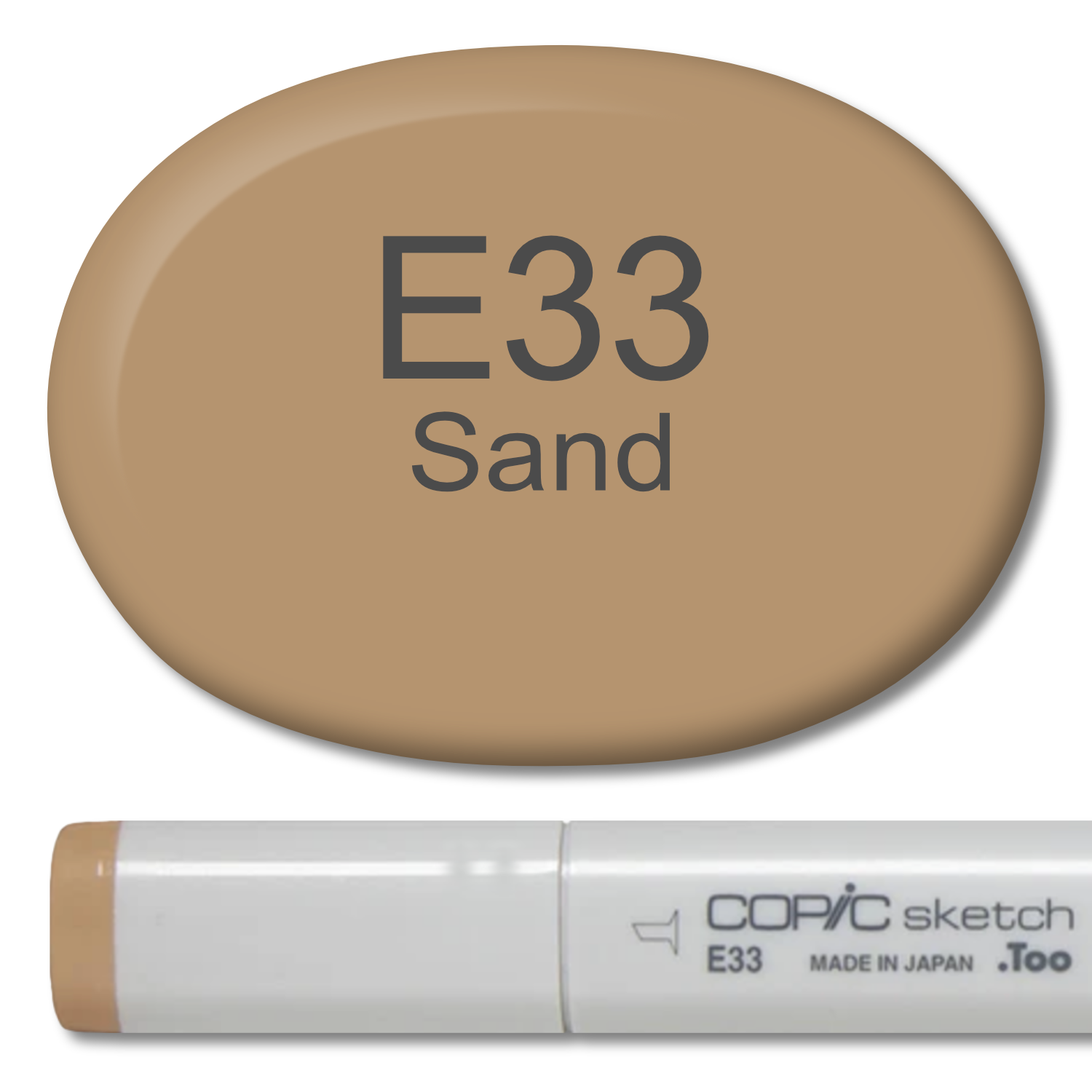
Copic Marker E33 Sand
E33 is a versatile warm beige that can be used for flesh tones, landscapes, foods, and animal fur. We rate E33 as an easy blending color and pairs best with E31 and E35. We recommend the entire E-Thirty group for beginners.
E33 is highly recommended by Amy at VanillaArts.com as part of her Copic Starter List for beginners. Her recommended E markers include E21, E31, E33, E35, E37, E50, and E59. Subscribe here for the full downloadable list.
Learn more about E33:
Article Link: Copics Uncapped E33
Video Link: How to Clean and Maintain Your Copic Markers
Refill: E33 Refill here. We recommend purchasing a refill with your Sketch Marker. Blending is significantly easier with a full marker.
About Copic Sketch Markers: Sketch are a dual-ended marker with Copic’s exclusive Super Brush Nib on one end for juicy and expressive strokes. The other end is a Medium Broad (chisel style) nib for precise lettering and drawing. Sketch style Copics have an ergonomic oval body and are the most comfortable style of Copic for long coloring sessions and for those with arthritis.
NOTE: Due to manufacturer restrictions, Copic Items can only be shipped to the USA and Canada (excluding the island of Oahu, Hawaii).
Disclaimers:

Copic Marker E47 Dark Brown
E47 is a dark brown color, but is lighter than you would expect. It’s great for urban landscapes, foods, and animal fur. We rate E47 as a moderately easy blending color and recommend it in combination with E44 and E49.
Learn more about E47:
Video Link: How to Clean and Maintain Your Copic Markers
Refill: E47 Refill here. We recommend purchasing a refill with your Sketch Marker. Blending is significantly easier with a full marker.
About Copic Sketch Markers: Sketch are a dual-ended marker with Copic’s exclusive Super Brush Nib on one end for juicy and expressive strokes. The other end is a Medium Broad (chisel style) nib for precise lettering and drawing. Sketch style Copics have an ergonomic oval body and are the most comfortable style of Copic for long coloring sessions and for those with arthritis.
NOTE: Due to manufacturer restrictions, Copic Items can only be shipped to the USA and Canada (excluding the island of Oahu, Hawaii).
Disclaimers:
Copic Marker E49 Dark Bark
E49 is a dark brown color, but is lighter than you might expect. It’s great for urban landscapes, foods, and animal fur. We rate E49 as a moderately easy blending color and recommend it in combination with E44 and E47.
Learn more about E49:
Article Link: Copics Uncapped E49
Video Link: How to Clean and Maintain Your Copic Markers
Refill: E49 Refill here. We recommend purchasing a refill with your Sketch Marker. Blending is significantly easier with a full marker.
About Copic Sketch Markers: Sketch are a dual-ended marker with Copic’s exclusive Super Brush Nib on one end for juicy and expressive strokes. The other end is a Medium Broad (chisel style) nib for precise lettering and drawing. Sketch style Copics have an ergonomic oval body and are the most comfortable style of Copic for long coloring sessions and for those with arthritis.
NOTE: Due to manufacturer restrictions, Copic Items can only be shipped to the USA and Canada (excluding the island of Oahu, Hawaii).
Disclaimers:

Copic Marker YR21 Cream
YR21 is a best seller here at Violeta Ink. This is a soft buttery yellow orange which feels more yellow than orange The entire YR-Twenty family has a brassy gold feeling. This color is perfect for florals, landscapes, food, and summer or autumn images. We rate YR21 a moderately easy blending color and recommend it for intermediates. YR21 works well in combination with YR23 and YR27.
Learn more about YR21:
Video Link: How to Clean and Maintain Your Copic Markers
Refill: YR21 Refill here. We recommend purchasing a refill with your Sketch Marker. Blending is significantly easier with a full marker.
About Copic Sketch Markers: Sketch are a dual-ended marker with Copic’s exclusive Super Brush Nib on one end for juicy and expressive strokes. The other end is a Medium Broad (chisel style) nib for precise lettering and drawing. Sketch style Copics have an ergonomic oval body and are the most comfortable style of Copic for long coloring sessions and for those with arthritis.
NOTE: Due to manufacturer restrictions, Copic Items can only be shipped to the USA and Canada (excluding the island of Oahu, Hawaii).
Disclaimers:

Copic Marker YR24 Pale Sepia
YR24 is a bright color which feels more yellow than orange. The entire YR-Twenty family has a brassy gold feeling. This color is perfect for florals, landscapes, food, and summer or autumn images. We rate YR24 as an easy blending color and it works well in combination with YR21 and YR27.
Learn more about YR24:
Article Link: Copics Uncapped YR24
Video Link: How to Clean and Maintain Your Copic Markers
Refill: YR24 Refill here. We recommend purchasing a refill with your Sketch Marker. Blending is significantly easier with a full marker.
About Copic Sketch Markers: Sketch are a dual-ended marker with Copic’s exclusive Super Brush Nib on one end for juicy and expressive strokes. The other end is a Medium Broad (chisel style) nib for precise lettering and drawing. Sketch style Copics have an ergonomic oval body and are the most comfortable style of Copic for long coloring sessions and for those with arthritis.
NOTE: Due to manufacturer restrictions, Copic Items can only be shipped to the USA and Canada (excluding the island of Oahu, Hawaii).
Disclaimers:

Copic Marker E35 Chamois
E35 is a versatile medium warm beige that can be used for flesh tones, landscapes, foods, and animal fur. We rate E35 as an easy blending color and pairs best with E33 and E37. We recommend the entire E-Thirty group for beginners.
E35 is highly recommended by Amy at VanillaArts.com as part of her Copic Starter List for beginners. Her recommended E markers include E21, E31, E33, E35, E37, E50, and E59. Subscribe here for the full downloadable list.
Learn more about E35:
Article Link: Copics Uncapped E35
Video Link: How to Clean and Maintain Your Copic Markers
Refill: E35 Refill here. We recommend purchasing a refill with your Sketch Marker. Blending is significantly easier with a full marker.
About Copic Sketch Markers: Sketch are a dual-ended marker with Copic’s exclusive Super Brush Nib on one end for juicy and expressive strokes. The other end is a Medium Broad (chisel style) nib for precise lettering and drawing. Sketch style Copics have an ergonomic oval body and are the most comfortable style of Copic for long coloring sessions and for those with arthritis.
NOTE: Due to manufacturer restrictions, Copic Items can only be shipped to the USA and Canada (excluding the island of Oahu, Hawaii).
Disclaimers:
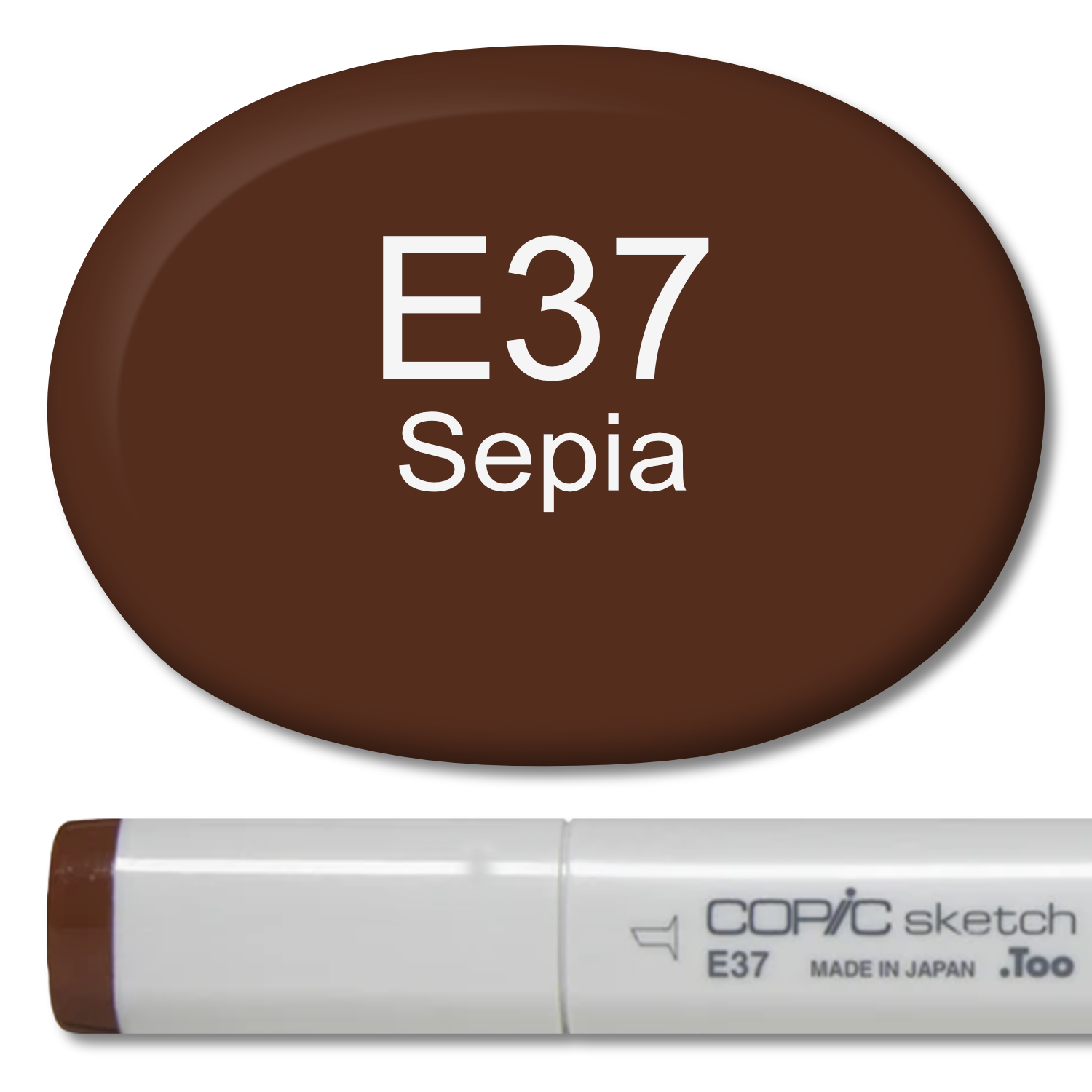
Copic Marker E37 Sepia
E37 is one of Copic’s best selling brown markers and it’s a best seller here at Violeta Ink. This is a versatile brown can be used for darker flesh tones, landscapes, food illustrations, and animal fur. We rate E37 as a moderately easy blending color and pairs best with E35 and E39. We recommend the entire E-Thirty group for beginners.
E37 is highly recommended by Amy at VanillaArts.com as part of her Copic Starter List for beginners. Her recommended E markers include E21, E31, E33, E35, E37, E50, and E59. Subscribe here for the full downloadable list.
Learn more about E37:
Video Link: All About E37
Article Link: Copics Uncapped E37
Video Link: How to Clean and Maintain Your Copic Markers
Refill: E37 Refill here. We recommend purchasing a refill with your Sketch Marker. Blending is significantly easier with a full marker.
About Copic Sketch Markers: Sketch are a dual-ended marker with Copic’s exclusive Super Brush Nib on one end for juicy and expressive strokes. The other end is a Medium Broad (chisel style) nib for precise lettering and drawing. Sketch style Copics have an ergonomic oval body and are the most comfortable style of Copic for long coloring sessions and for those with arthritis.
NOTE: Due to manufacturer restrictions, Copic Items can only be shipped to the USA and Canada (excluding the island of Oahu, Hawaii).
Disclaimers:
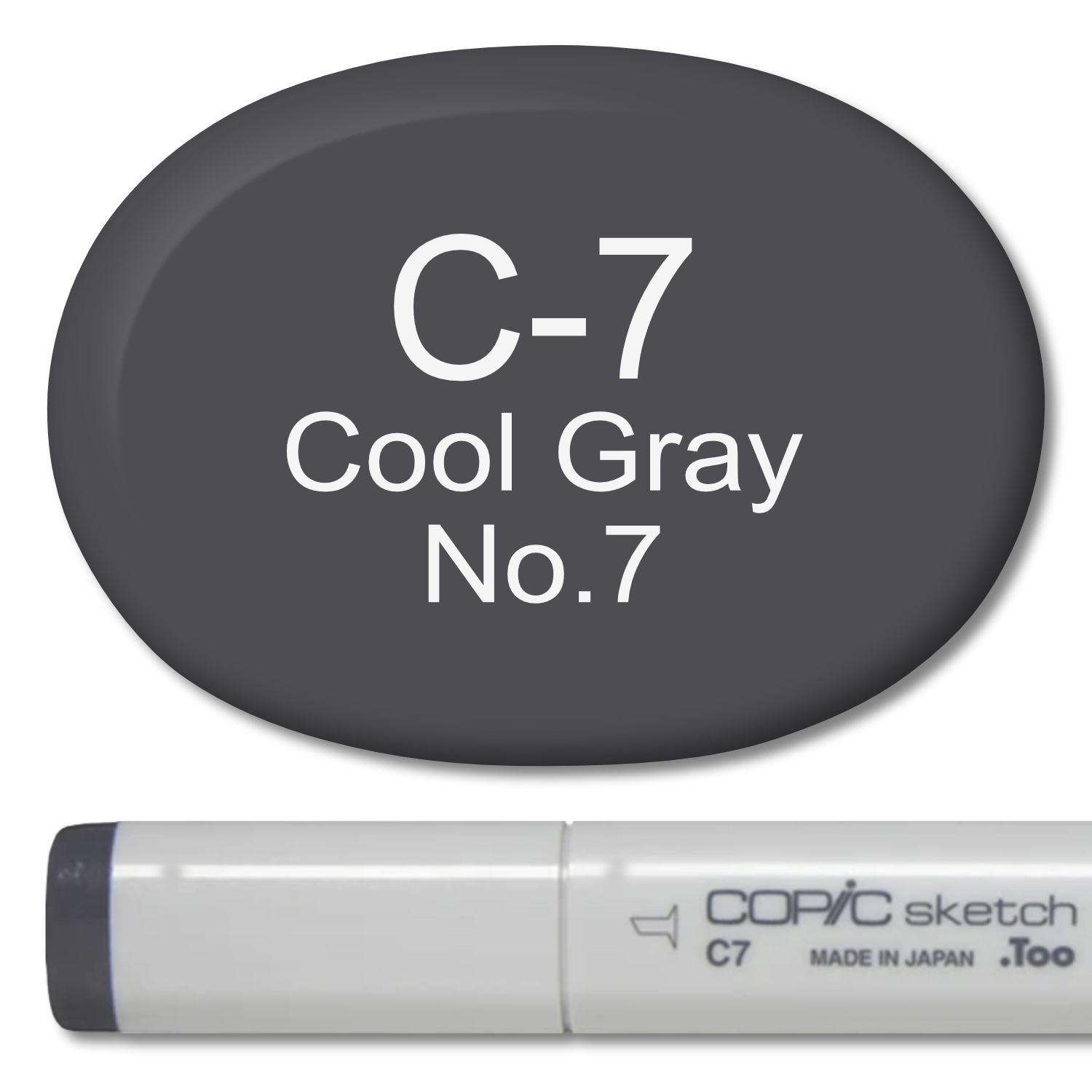
Copic Marker C7 Cool Gray
C7 is a medium-dark cool toned gray, ideal for backgrounds, shadows, and underpainting cool tones.
Learn more about C7:
Article Link: Copics Uncapped C7
Video Link: How to Clean and Maintain Your Copic Markers
Refill: C7 Refill here. We recommend purchasing a refill with your Sketch Marker. Blending is significantly easier with a full marker.
About Copic Sketch Markers: Sketch are a dual-ended marker with Copic’s exclusive Super Brush Nib on one end for juicy and expressive strokes. The other end is a Medium Broad (chisel style) nib for precise lettering and drawing. Sketch style Copics have an ergonomic oval body and are the most comfortable style of Copic for long coloring sessions and for those with arthritis.
NOTE: Due to manufacturer restrictions, Copic Items can only be shipped to the USA and Canada (excluding the island of Oahu, Hawaii).
Disclaimers:

Copic Marker C5 Cool Gray
C5 is a medium cool toned gray, ideal for backgrounds, shadows, and underpainting cool tones.
Learn more about C5:
Article Link: Copics Uncapped C5
Video Link: How to Clean and Maintain Your Copic Markers
Refill: C5 Refill here. We recommend purchasing a refill with your Sketch Marker. Blending is significantly easier with a full marker.
About Copic Sketch Markers: Sketch are a dual-ended marker with Copic’s exclusive Super Brush Nib on one end for juicy and expressive strokes. The other end is a Medium Broad (chisel style) nib for precise lettering and drawing. Sketch style Copics have an ergonomic oval body and are the most comfortable style of Copic for long coloring sessions and for those with arthritis.
NOTE: Due to manufacturer restrictions, Copic Items can only be shipped to the USA and Canada (excluding the island of Oahu, Hawaii).
Disclaimers:

Copic Marker 100 Black
100 is a rich black with a slight blue undertone, perfect for cool leaning illustrations.
100 is highly recommended by Amy at VanillaArts.com as part of her Copic Starter List for beginners. Her recommended Black and Gray markers include 100(or 110), N2, N4, N6, and N8. Subscribe here for the full downloadable list.
Learn more about 100:
Article Link: Copics Uncapped 100
Video Link: How to Clean and Maintain Your Copic Markers
Refill: 100 Refill here. We recommend purchasing a refill with your Sketch Marker. Blending is significantly easier with a full marker.
About Copic Sketch Markers: Sketch are a dual-ended marker with Copic’s exclusive Super Brush Nib on one end for juicy and expressive strokes. The other end is a Medium Broad (chisel style) nib for precise lettering and drawing. Sketch style Copics have an ergonomic oval body and are the most comfortable style of Copic for long coloring sessions and for those with arthritis.
NOTE: Due to manufacturer restrictions, Copic Items can only be shipped to the USA and Canada (excluding the island of Oahu, Hawaii).
Disclaimers:
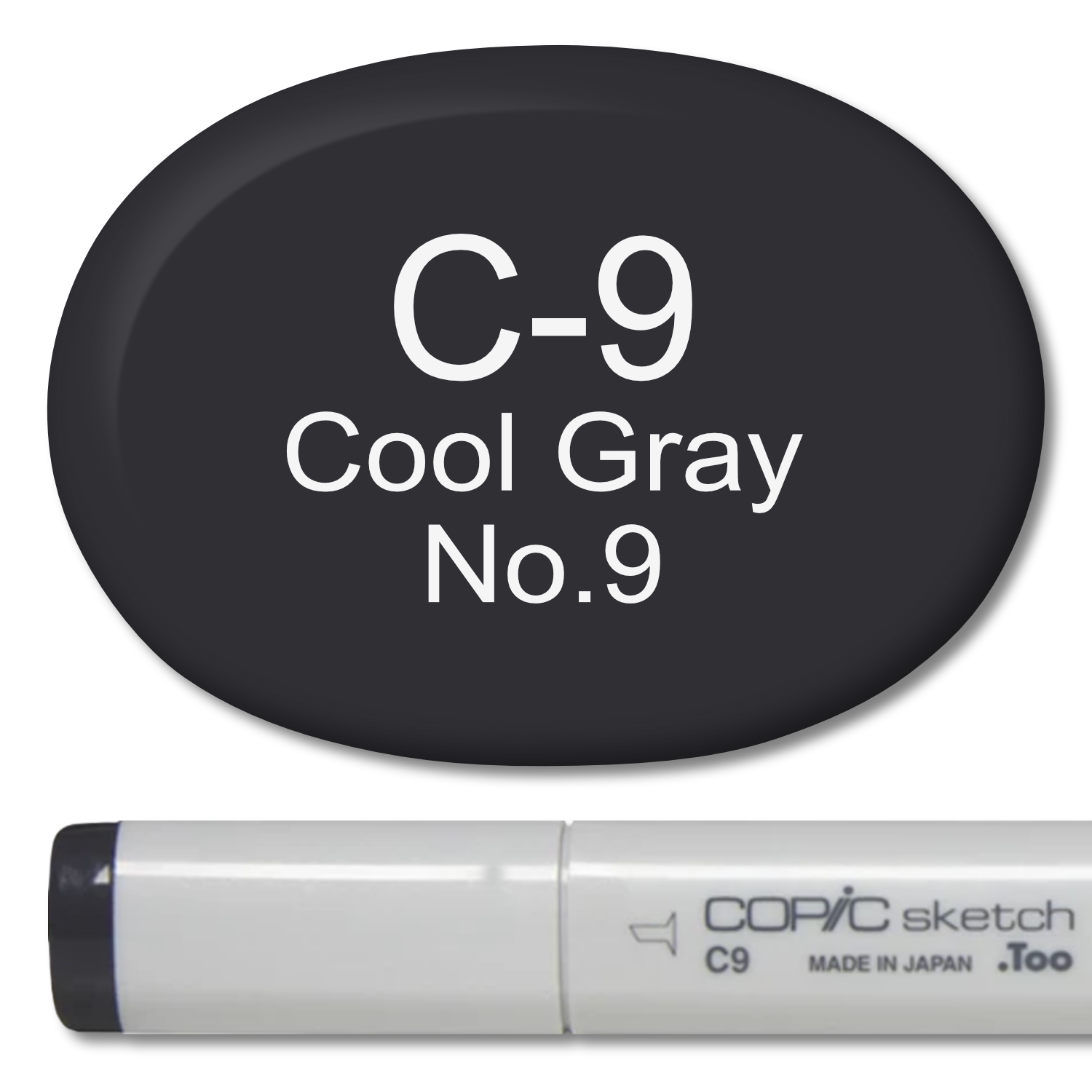
Copic Marker C9 Cool Gray
C9 is a dark cool toned gray, ideal for backgrounds, shadows, and underpainting cool tones.
Learn more about C9:
Video Link: All About C9
Article Link: Copics Uncapped C9
Video Link: How to Clean and Maintain Your Copic Markers
Refill: C9 Refill here. We recommend purchasing a refill with your Sketch Marker. Blending is significantly easier with a full marker.
About Copic Sketch Markers: Sketch are a dual-ended marker with Copic’s exclusive Super Brush Nib on one end for juicy and expressive strokes. The other end is a Medium Broad (chisel style) nib for precise lettering and drawing. Sketch style Copics have an ergonomic oval body and are the most comfortable style of Copic for long coloring sessions and for those with arthritis.
NOTE: Due to manufacturer restrictions, Copic Items can only be shipped to the USA and Canada (excluding the island of Oahu, Hawaii).
Disclaimers:
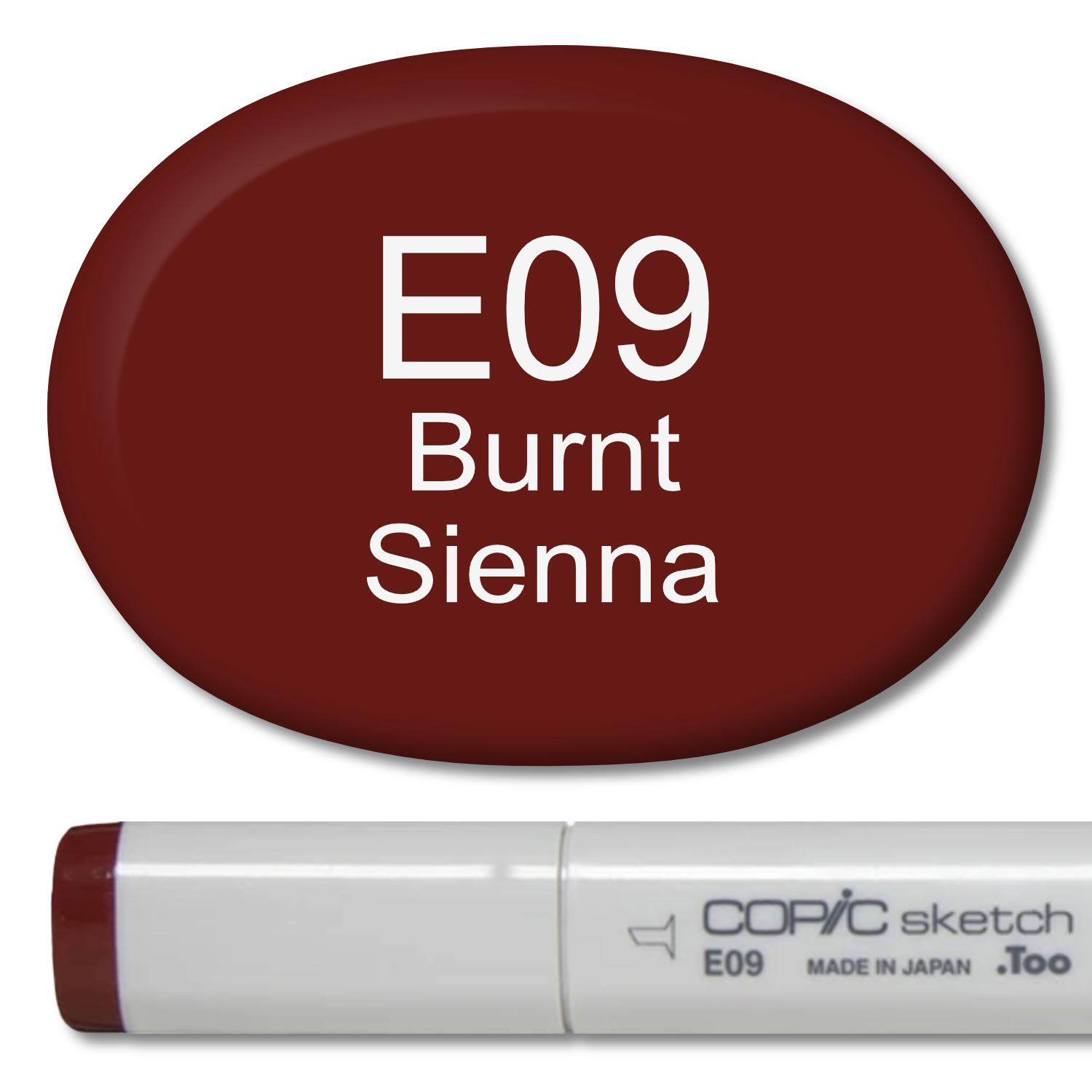
Copic Marker E09 Burnt Sienna
E09 is a dark tan color with an orangish hue. It’s great for florals, animals, and anything that needs a rich, warm brown. We rate E09 as a slightly challenging blending color and recommend it to use with E04 and E07.
Learn more about E09:
Video Link: All About E09
Article Link: Copics Uncapped E09
Video Link: How to Clean and Maintain Your Copic Markers
Refill: E09 Refill here. We recommend purchasing a refill with your Sketch Marker. Blending is significantly easier with a full marker.
About Copic Sketch Markers: Sketch are a dual-ended marker with Copic’s exclusive Super Brush Nib on one end for juicy and expressive strokes. The other end is a Medium Broad (chisel style) nib for precise lettering and drawing. Sketch style Copics have an ergonomic oval body and are the most comfortable style of Copic for long coloring sessions and for those with arthritis.
NOTE: Due to manufacturer restrictions, Copic Items can only be shipped to the USA and Canada (excluding the island of Oahu, Hawaii).
Disclaimers:

Copic Marker E07 Light Mahogany
E07 is a medium dark tan color with an orangish hue. It’s great for florals, animals, and anything that needs a rich, warm brown. We rate E07 as a moderately easy blending color and recommend it to use with E04 and E09.
Learn more about E07:
Article Link: Copics Uncapped E07
Video Link: How to Clean and Maintain Your Copic Markers
Refill: E07 Refill here. We recommend purchasing a refill with your Sketch Marker. Blending is significantly easier with a full marker.
About Copic Sketch Markers: Sketch are a dual-ended marker with Copic’s exclusive Super Brush Nib on one end for juicy and expressive strokes. The other end is a Medium Broad (chisel style) nib for precise lettering and drawing. Sketch style Copics have an ergonomic oval body and are the most comfortable style of Copic for long coloring sessions and for those with arthritis.
NOTE: Due to manufacturer restrictions, Copic Items can only be shipped to the USA and Canada (excluding the island of Oahu, Hawaii).
Disclaimers:
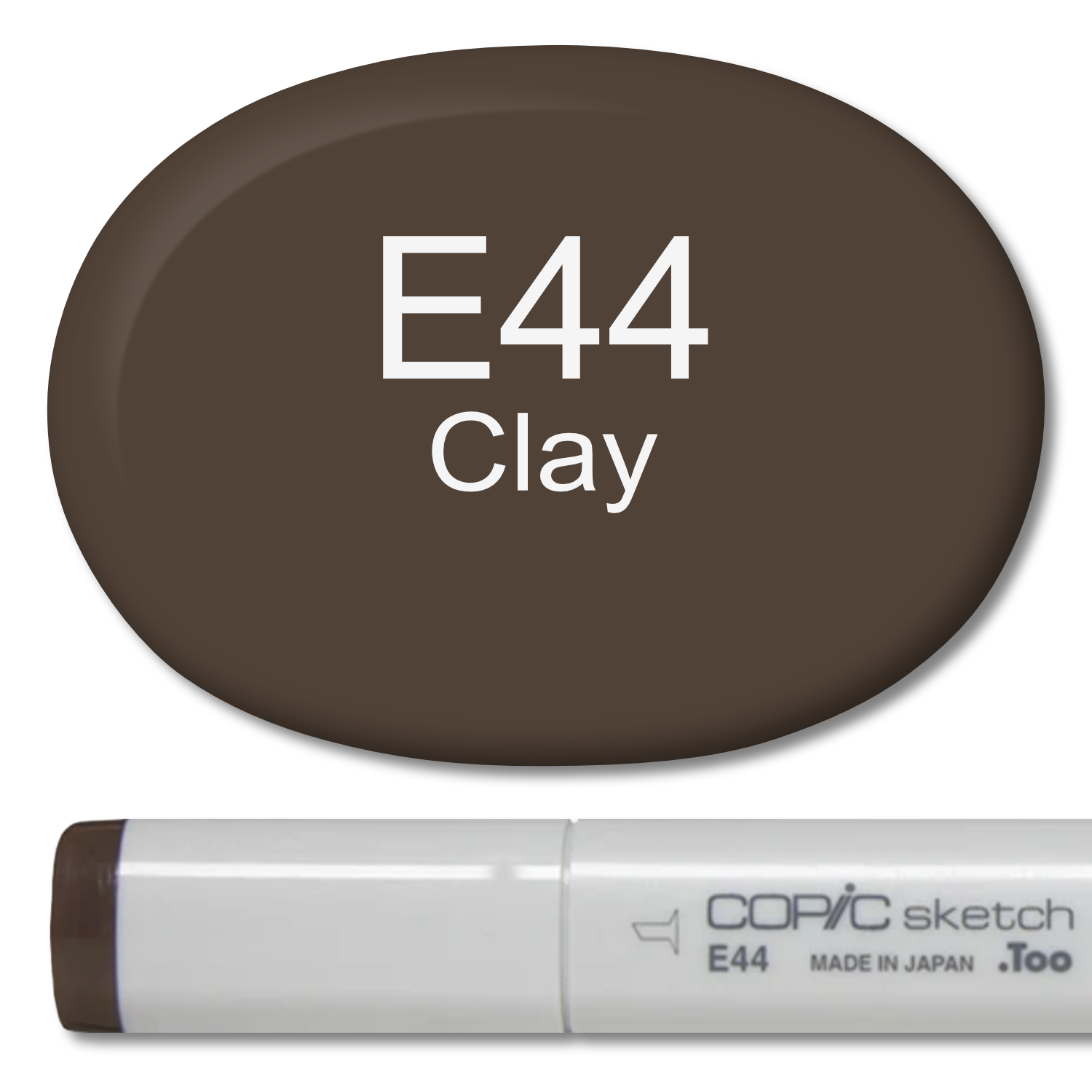
Copic Marker E44 Clay
E44 is a medium neutral beige, and is lighter than you would expect. It’s great for urban landscapes, foods, and animal fur. We rate E44 as a moderately easy blending color and recommend it in combination with E42 and E47.
Learn more about E44:
Article Link: Copics Uncapped E44
Video Link: How to Clean and Maintain Your Copic Markers
Refill: E44 Refill here. We recommend purchasing a refill with your Sketch Marker. Blending is significantly easier with a full marker.
About Copic Sketch Markers: Sketch are a dual-ended marker with Copic’s exclusive Super Brush Nib on one end for juicy and expressive strokes. The other end is a Medium Broad (chisel style) nib for precise lettering and drawing. Sketch style Copics have an ergonomic oval body and are the most comfortable style of Copic for long coloring sessions and for those with arthritis.
NOTE: Due to manufacturer restrictions, Copic Items can only be shipped to the USA and Canada (excluding the island of Oahu, Hawaii).
Disclaimers:

Frequently Asked Questions
-
For a versatile beginner skin-tone collection, start with E000, E00, E11, E13, E21, E23, E25, E27, E29, and E49. Add R20 for blush and warmth, and BV20 for soft cool shadows.
These colors can be mixed and layered to create a range of fair, light, medium, tan, and deep skin tones.
-
A useful light-skin combination is E000, E00, E11, and E13.
Use E000 and E00 for the lightest areas, then add E11 and E13 gradually for warmth and shadow. R20 can be added lightly to the cheeks, lips, ears, and other naturally warm areas.
-
For medium and warm skin tones, try E21, E23, and E25.
E21 works well as a lighter base, E23 adds warmth and midtone depth, and E25 can be used for stronger shadows and contrast.
-
A flexible deeper-skin combination is E23, E25, E27, and E29, with E49 for the deepest accents.
Layer the colors gradually and preserve lighter areas for highlights so the finished skin keeps dimension instead of looking flat.
-
For blonde hair, try Y21, Y23, and E35.
Add a small amount of E37 for deeper shadows and stronger contrast. Keeping some lighter areas visible helps create natural-looking shine.
-
A simple brown-hair combination is E31, E35, and E37.
E31 can be used in lighter areas, E35 builds the midtones, and E37 adds depth. For darker brunette hair, add E49 sparingly in the deepest shadows.
-
For dark brown hair, try E44, E47, and E49.
Use E44 in the lighter areas, E47 through the midtones, and E49 only in the deepest shadows. Leaving some of the lighter brown visible helps keep dark hair dimensional.
-
For red hair, try YR21, YR24, and E07.
Use YR21 for golden highlights, YR24 for warm copper midtones, and E07 for deeper reddish-brown areas. Add E09 if you want a darker auburn look.
-
For black hair, try C5, C7, and C9 instead of coloring the entire area with black.
Using several dark grays creates visible highlights and shadows while still making the hair read as black. 100 Black can be added sparingly in the very darkest areas.
-
You can begin with just three compatible markers: a light color, a midtone, and a darker shadow color.
As you build your collection, adding extra shades for blush, undertones, highlights, and deeper shadows gives you more flexibility.
-
Yes. Paper can change how quickly Copic ink absorbs, how easily colors blend, and how much the ink feathers.
Smooth, alcohol-marker-friendly paper generally gives you more control and uses less ink than very absorbent paper. Always test your color combination on the paper you plan to use before starting your finished artwork.
-
No. Copic skin-tone combinations are starting points, not strict rules.
Lighting, paper, surrounding colors, undertones, and your coloring style can all change which markers work best together. Swatching and experimenting is part of finding the combinations you like most.